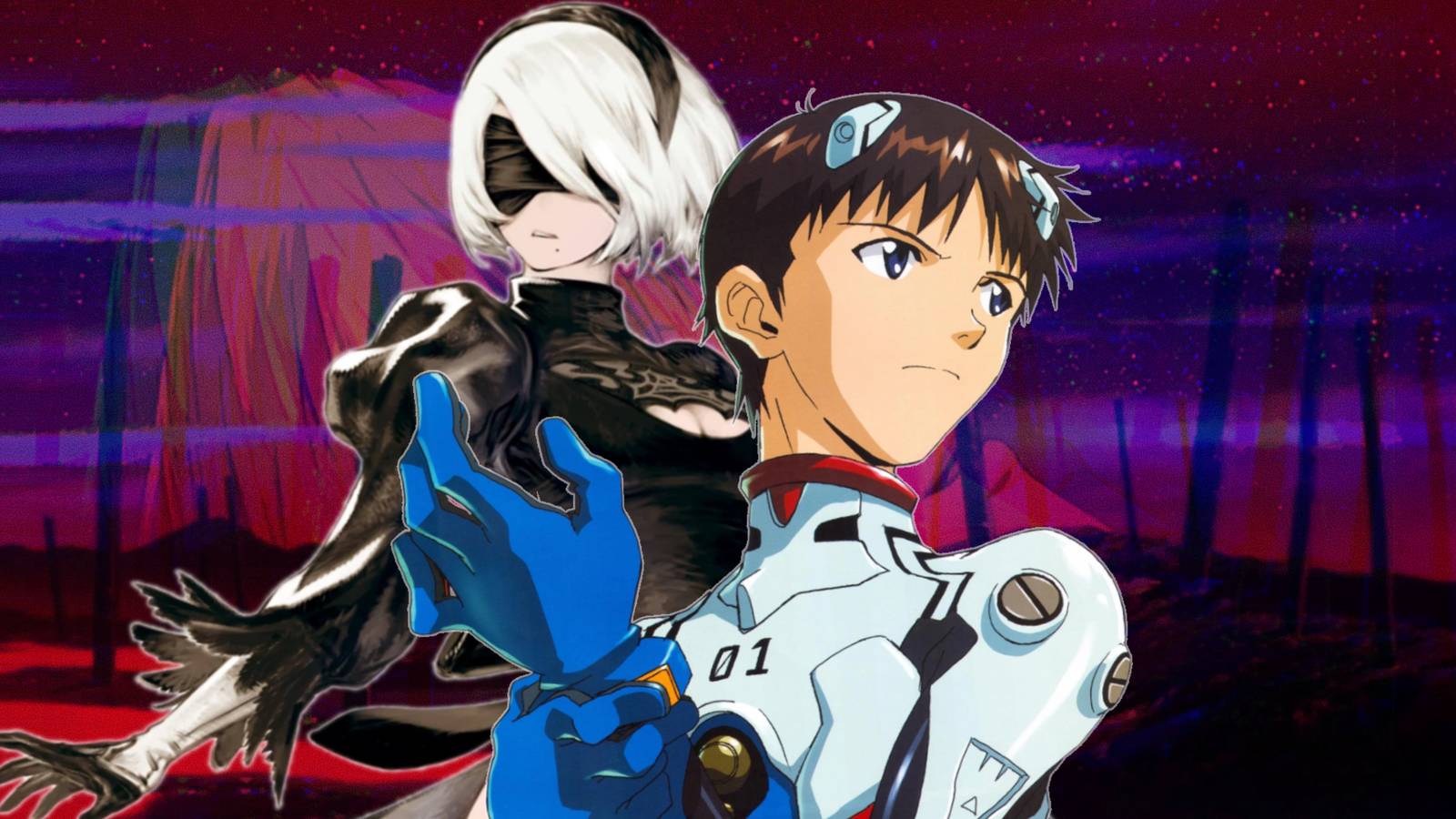
Evangelion Without Anno: A New Era Under Yoko Taro's Direction
The anime and gaming worlds collectively held their breath with the announcement that Yoko Taro, the visionary mind behind the critically acclaimed NieR series, will be spearheading a new Evangelion television series. This unexpected collaboration, pairing the distinct philosophical bleakness of the NieR creator with Evangelion's iconic mecha psycho-drama, promises a fresh, perhaps even radical, direction for one of anime's most revered franchises. Studio Khara, the original creators, are co-producing this ambitious project with CloverWorks (known for hits like Spy x Family), signaling a major shift and a bold step into uncharted narrative territory.
For decades, Neon Genesis Evangelion has been synonymous with Hideaki Anno's singular vision – a complex tapestry of psychological introspection, existential dread, and groundbreaking mecha action that redefined the anime landscape. With Anno conspicuously absent from the lead creative credits for this new series, the focus pivots entirely to Yoko Taro, an artist celebrated for his experimental storytelling, profound philosophical narratives, and a unique ability to deconstruct genres. The implications are enormous: what will an Evangelion story look like when filtered through the lens of a creator whose work openly acknowledges its inspiration from Anno's masterpiece, yet promises to forge its own path?
Yoko Taro's Bleak Brilliance: A Perfect Storm for Evangelion?
Yoko Taro is not just a game designer; he is a storyteller with a distinct, often unsettling, voice. His major works, including the Drakengard and NieR franchises, are characterized by their bleak, post-apocalyptic settings, deeply flawed characters, multiple narrative perspectives, and a relentless exploration of existential themes. From the tragic heroism of 2B in NieR: Automata to the desperate moral quandaries of Drakengard, Taro consistently challenges players to confront uncomfortable truths about humanity, artificial intelligence, and the meaning of suffering. His narratives often employ non-linear structures, unreliable narrators, and endings that force profound re-evaluations of what came before.
It's precisely this sensibility that makes the NieR creator's Evangelion take so intriguing. Evangelion itself is a masterclass in psychological deconstruction, delving into the trauma of its young pilots, the burden of prophecy, and humanity's capacity for both profound connection and devastating self-destruction. Taro's acknowledged inspiration from Evangelion suggests a deep understanding of its core tenets, yet his own creative DNA hints at a potential expansion or reinterpretation of these themes rather than a mere homage.
Consider these possibilities for Taro's influence:
- Philosophical Depth: Taro excels at exploring questions of purpose, identity, and the futility of existence. He could delve deeper into the nature of the Angels, the origins of humanity, or the ultimate goals of NERV and Seele, presenting them with an even more layered, morally ambiguous perspective.
- Experimental Storytelling: Could the TV series adopt non-linear narratives, shifting perspectives between various characters (human, Angel, or even EVA units), or perhaps even "alternate endings" that present different outcomes for crucial events, conceptually translating his game design principles?
- Deconstruction and Meta-Narrative: Taro loves to deconstruct genres and tropes. He might tackle Evangelion's own legacy, questioning its impact, its characters' motivations, or even the viewer's relationship with the franchise itself, offering a meta-commentary that echoes his games' self-awareness.
The involvement of Keiichi Okabe, the celebrated composer behind NieR: Automata's haunting soundtrack, further cements the potential for a profoundly atmospheric and emotionally resonant experience. Okabe's ability to craft music that is simultaneously beautiful and melancholic could elevate Evangelion's iconic soundscapes to new heights, perfectly complementing Taro's narrative vision.
Navigating the Unknown: Plotlines, Pilots, and Anno's Absence
With no plot details, release timing, or cast information yet revealed, speculation runs wild. Is this a direct sequel to the Rebuild of Evangelion films, venturing beyond the universe Shinji and Mari found themselves in? A prequel exploring the Second Impact or the genesis of NERV? An alternative timeline in the vein of Evangelion: Anima, or something entirely new with fresh pilots, countries, and conflicts?
Many long-time fans express a readiness for new characters and stories, feeling that the arcs of Shinji, Asuka, and Rei have been thoroughly explored and concluded by Anno. This sentiment aligns perfectly with Taro's inclination towards fresh perspectives and character studies. He could introduce a new generation of pilots burdened by the legacy of the Evas, or explore different facets of the global catastrophe, perhaps from the viewpoint of those far removed from Tokyo-3.
A key factor distinguishing this project is Hideaki Anno's role. His absence from the lead creative credits as writer or director signifies a true passing of the torch. While he will undoubtedly have an executive role through Studio Khara, his direct creative influence on the narrative and tone is expected to be minimal. This is a monumental shift, as Anno has been the undisputed shepherd of Evangelion since its inception. While some purists may view this with trepidation, many see it as an opportunity for genuine innovation. It allows the franchise to evolve beyond Anno's concluded narrative, giving it space to breathe and grow under a new, yet equally visionary, mind.
The series will be directed by Kazuya Tsurumaki, a long-time Evangelion collaborator and director of FLCL, alongside Toko Yatabe, who has also worked extensively within the franchise. This directorial duo provides a crucial bridge between Evangelion's established identity and Taro's fresh narrative input, ensuring that while the story might be new, the visual and thematic language retains a familiar resonance. Fans should prepare for a story that might challenge their preconceptions of Evangelion rather than cater to nostalgia, offering profound new interpretations.
The Thinning Veil: Games, Anime, and Transmedia Storytelling
Yoko Taro's appointment as the lead writer for a new Evangelion TV series is a striking example of the increasingly blurred lines between game and anime production in Japan. For years, the two mediums have influenced each other, but now, leading creative figures are actively crossing over. Hideo Kojima, for instance, has extensively incorporated cinematic techniques and star power into his Death Stranding franchise, often speaking about his desire to further integrate film and game narratives.
This trend reflects a broader recognition of narrative talent, regardless of the medium of origin. Game writers are no longer confined to their specific domain; their storytelling prowess is now seen as transferable and valuable across different forms of entertainment. This cross-pollination can lead to exciting results:
- New Narrative Structures: Taro's experience with branching narratives and player agency in games could inspire more interactive or meta-narrative elements in the anime, even if conceptual rather than literal.
- Diverse Character Perspectives: His games often excel at portraying multiple, sometimes conflicting, viewpoints, which could enrich Evangelion's already complex psychological landscape.
- Broader Thematic Exploration: Game narratives often tackle themes of player choice, consequence, and the nature of simulated realities – concepts that could find a natural home within Evangelion's philosophical framework.
The embrace of a nier creator evangelion collaboration highlights a mature industry willing to take risks and explore new avenues for beloved properties. It signals a future where the best storytellers, regardless of their primary medium, are given the platform to bring their unique visions to life.
The prospect of Evangelion under Yoko Taro's direction is undeniably one of the most intriguing anime projects on the horizon. His signature style, characterized by bleak philosophical narratives and experimental storytelling, promises a fresh and potentially groundbreaking take on a beloved franchise. With Hideaki Anno stepping back, this new series represents a true passing of the torch, ushering in an era of bold exploration for the world of Evas and Angels. While details remain scarce, the creative lineup alone guarantees a project rich in atmosphere, profound narrative, and perhaps, a new understanding of what it means to pilot an Evangelion. The anticipation for more information is palpable, and fans worldwide eagerly await the dawn of this new, unpredictable chapter.